ServicesReverse Osmosis System
Reverse Osmosis System Installation in Phoenix
We fit under-sink reverse osmosis systems that turn ordinary tap water into clean-tasting water for drinking, coffee and ice. The unit sits neatly in your cabinet, feeds its own faucet and is set up so filter changes stay simple through every season.
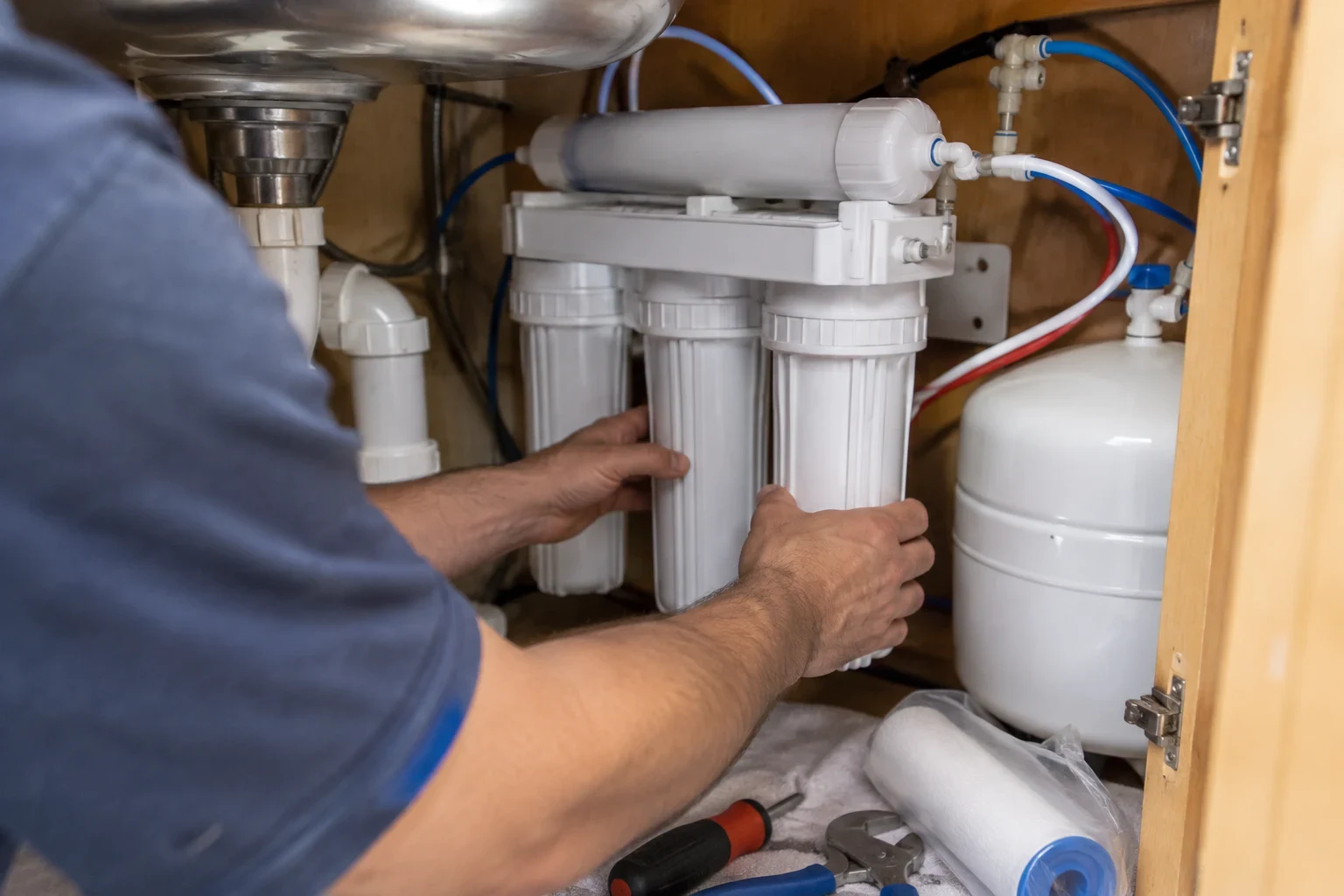
What a reverse osmosis system does for your kitchen
A reverse osmosis system forces tap water across a membrane with openings so small that most dissolved salts and minerals, and many trace contaminants, are left behind. Carbon filters on either side of that membrane remove the taste and smell of chlorine. The water that fills your glass tastes lighter and cleaner than what runs from the regular faucet.
Phoenix water is high in dissolved minerals, which can make it taste flat or a little salty and leaves white rings on kettles and glasses. A softener for the whole house handles scale in the pipes and fixtures, but it does nothing to improve drinking water. RO fills that gap at a single sink, for drinking and cooking.
Many of our installs land in late spring. Water use climbs through the summer, ice makers work harder, and new filters going in before the heat means the system performs best just when you rely on it most.
What comes with your installation
- A system sized to your household
- We ask how many people drink from the tap, whether a refrigerator line is on your list, and how much room the cabinet has. From there we recommend the unit that suits you, not simply the largest one on offer.
- A dedicated faucet with a clean finish
- Filtered water gets a faucet of its own, mounted on the sink deck or the counter, in a finish picked to match the fixtures already in your kitchen. Where an unused knockout or old sprayer opening exists, we use that first and only drill when we have to.
- Tidy plumbing under the sink
- We cut the supply, drain and tank lines to length and run them so the disposal and your cleaning supplies stay within easy reach. The drain connection uses an air gap or an approved saddle, which keeps wastewater from siphoning back into the system.
- Refrigerator and ice maker line
- If you would like it, we run filtered water to the fridge so the ice and the dispenser draw from the same clean supply. The line is checked for kinks and secured away from the compressor.
- Startup, flush and a walkthrough
- We flush the new cartridges, pressure-check every fitting for leaks, and show you where the shutoff valve is and how the filter housings open.
Signs an RO system is the right next step
You are carrying cases of bottled water
If the garage holds stacks of bottled water every summer, an RO faucet usually replaces most of it and frees up the space.
Tap water tastes flat, salty or of chlorine
High dissolved mineral content and disinfectant both affect taste. RO with carbon stages addresses each of them.
Cloudy ice and spotted glassware
Minerals left behind as water freezes or dries show up as cloudy cubes and white film. Filtered water at the fridge and sink cuts that down.
Coffee and tea never taste quite right
Hard, mineral-heavy water dulls flavor and builds scale in coffee makers. Many customers notice the difference within the first morning.
Your current RO unit is slow or tired
A faucet that trickles, a tank that never fills or a strong taste returning usually means the membrane or prefilters are spent. We can service it or replace it with a cleaner setup.
How install day runs
- 1
A conversation by phone first
You describe your kitchen, your sink and what you would like to change about your water. We lay out the choices and the probable scope of the job, so the install day holds no surprises.
- 2
Protecting the space
Floor mats go down, we empty the cabinet together with you, and our tools stay off your counters. Nearly all of the work is done inside the open cabinet.
- 3
Fitting the system
The filter assembly and storage tank are mounted, the faucet goes in, and supply and drain lines are connected. A fridge line, if you wanted one, is added now.
- 4
Flush, test and clean up
We flush the new filters, check the connections under pressure, then wipe out the cabinet and put your things back. You will know how to change filters and what signs to watch for before we head out.
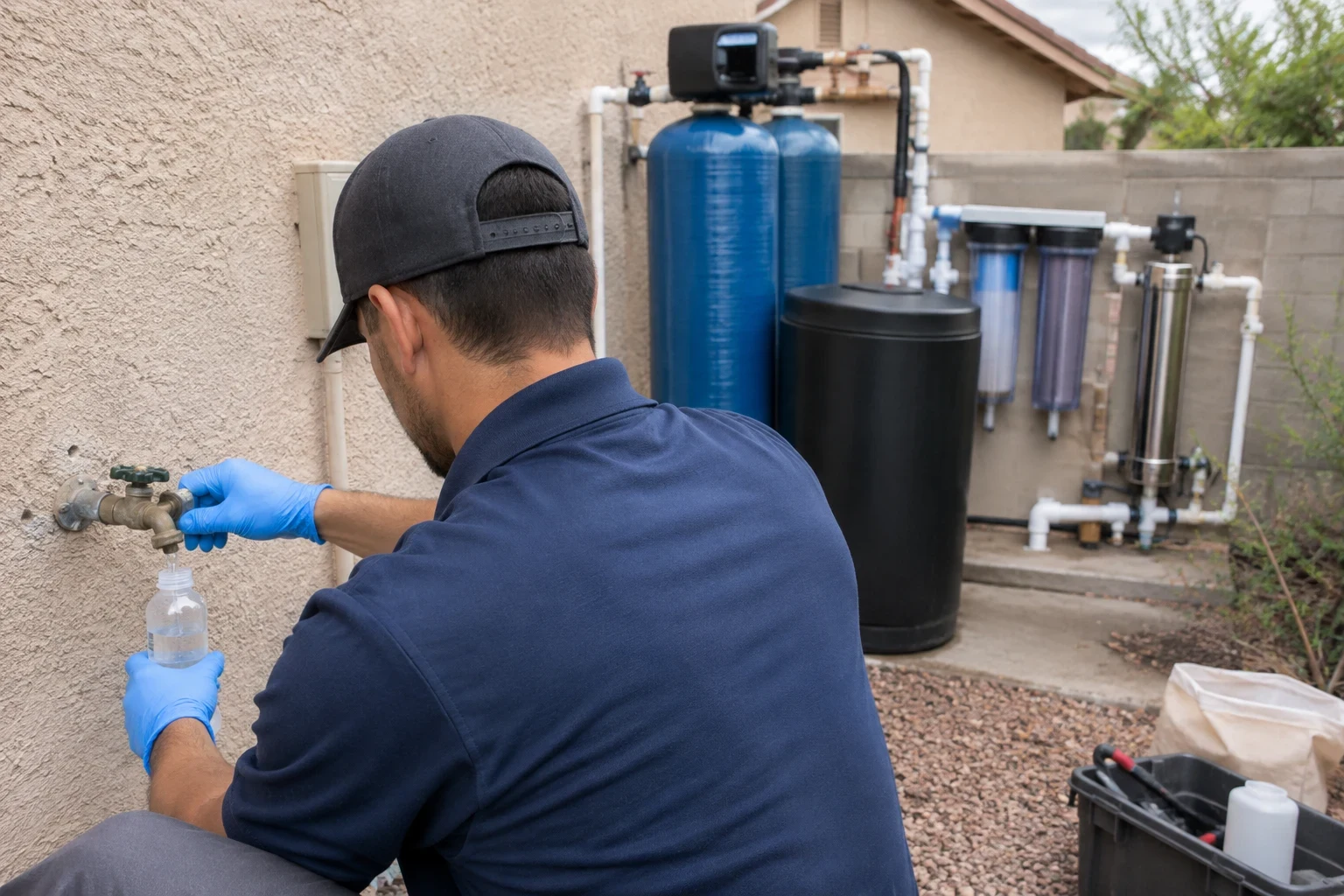
What shapes the cost of an RO system
No two kitchens are set up quite alike, so we walk you through the price in plain language before anything is installed. The total comes down to the equipment you pick and how much plumbing the job calls for. We explain it by phone, then put the details in writing before work begins.
- System type and stages
- A conventional tank unit is the most economical choice. Tankless designs cost more, as do systems with a mineral cartridge that returns small amounts of calcium and magnesium to the water to round out the taste.
- Faucet style and finish
- A plain chrome faucet keeps the total down. Air-gap faucets and finishes like brushed nickel or matte black raise it somewhat.
- Refrigerator line distance
- When the fridge sits right next to the sink, the line goes in quickly. A run that has to pass through several cabinets or beneath flooring needs more tubing and more time.
- Countertop and cabinet conditions
- Cutting a new faucet hole in granite or quartz calls for diamond bits and a slow, careful hand. Tight cabinets, or aging shutoff valves that should be swapped out, can add to the work as well.
Reverse osmosis questions we hear often
Something not covered here? (602) 536-4647
Do I still need a water softener if I get RO?
They do different jobs. RO improves the water you drink and cook with at one sink, while a softener protects the pipes, water heater and fixtures throughout your home. When hard water is softened before it reaches the RO unit, the membrane also tends to last longer. Our Water Softener Installation page covers that half of the picture.
How often should the cartridges be replaced?
Most homes swap the sediment prefilter, the carbon prefilter and the final carbon polishing filter about once a year, sooner if the faucet sees heavy daily use. The membrane itself usually lasts several years before it needs attention. We suggest scheduling the change in spring, so fresh cartridges are in place before the hottest months arrive.
Does a reverse osmosis system waste water?
Some water goes to the drain to rinse away what the membrane holds back. How much depends on the unit and the pressure in your lines. Systems with a permeate pump or a high-efficiency membrane send considerably less to the drain, and we can walk through those options when you call.
Will it take up my whole sink cabinet?
No. A typical tank system uses one side of the cabinet, and tankless models need even less space. We route the tubing so the disposal and your everyday supplies remain easy to reach.
What warranty comes with the installation?
Your RO installation carries a 2-year installation warranty, and our work is backed by a 2-year labor warranty. If you have an active salt delivery subscription, warranty labor is free. Our Automated Salt Delivery page explains how that service works.
Get your drinking water ready before summer
Tell us about your kitchen and how your household uses water, and we will suggest a system that fits your cabinet and your routine. Your quote is given by phone, with no pressure to decide on the spot.