ServicesWater Softener Installation
Water Softener Installation in Phoenix
We fit a water softener sized to how your home uses water, with a bypass valve, a proper drain and settings matched to your household. You get softer water at every tap, less scale on fixtures and appliances, and a clean install you will not mind looking at.
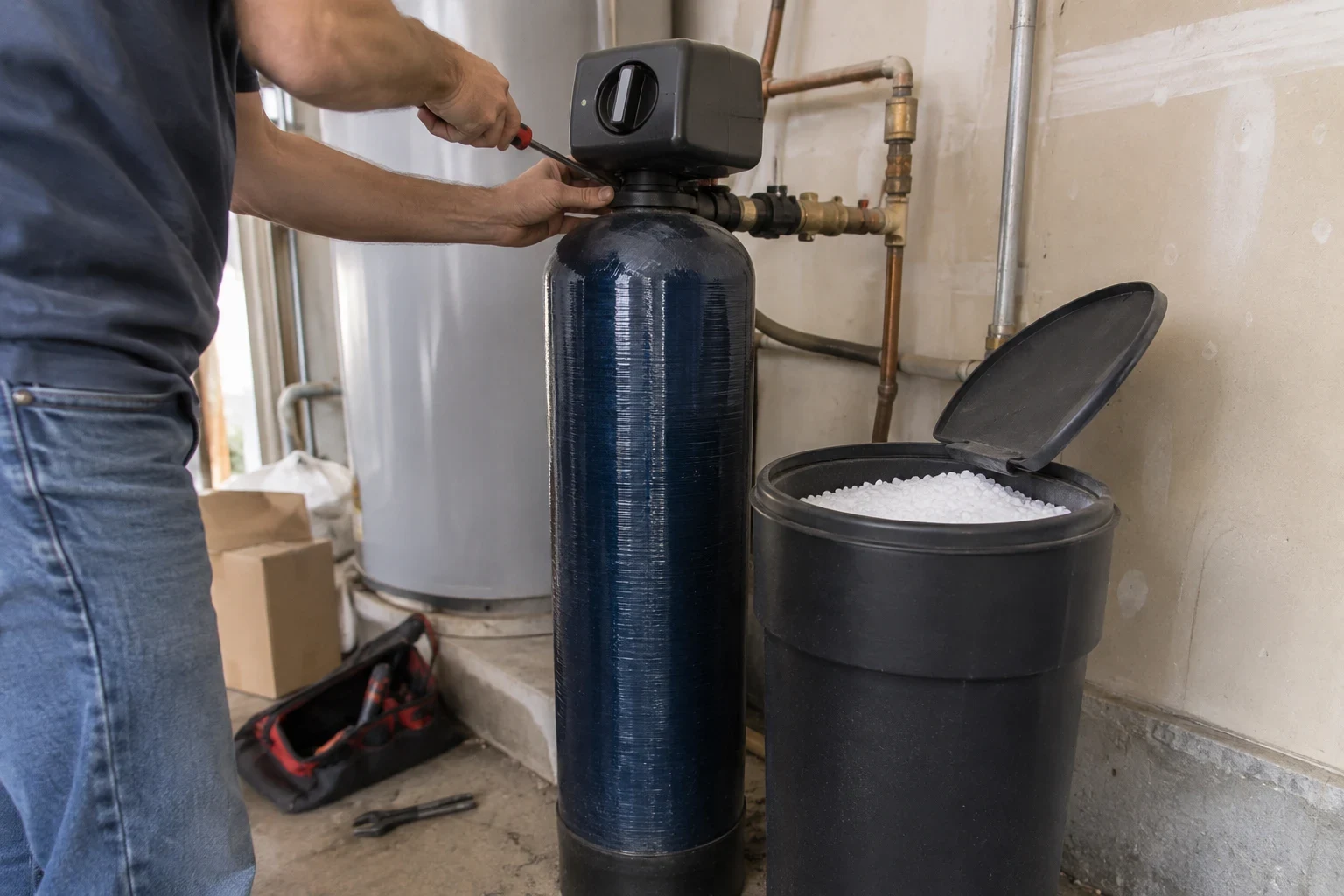
A softener that suits your home
Hard water leaves its mark slowly. The white crust on a faucet, the cloudy film on shower glass and the rumble in a water heater all come from the same minerals settling out wherever water is heated or left to dry. A water softener removes those minerals before they reach your fixtures, so the buildup stops forming.
Our work is about fit and finish. We choose a unit with the capacity your home needs, connect it at the right point in your plumbing and set the regeneration schedule around your actual use. Plenty of houses around the valley were built with a softener loop near the garage wall, and that makes for a tidy connection. If yours was not, we explain what adding one involves before any pipe is cut.
Timing matters too. Water use climbs through the hot months, and a softener installed in spring is settled and dialed in before the heaviest demand of the year arrives.
What your installation includes
A unit matched to your home
Before choosing a model, we count bathrooms, ask who lives in the house and look at how heavy the scale is on your fixtures. Too small a unit cycles constantly and burns through salt, while too large a one simply costs more up front.
Bypass valve and clean connections
Every install gets a bypass valve so the softener can be isolated for service without shutting off water to your home. Connections are made with materials suited to your existing pipe and left square and secured.
A protected drain connection
Brine from each regeneration is routed to an approved drain, with an open break between the hose and the drain opening. That gap keeps used water from ever being drawn back toward the softener.
Programming and first fill
We set the hardness and regeneration settings, add the first load of salt and run a cycle with you there, so you know what normal looks like.
Removal and cleanup
If an old softener is coming out, we disconnect it and take it with us. The work area is left swept and dry, with the floor protected throughout.
Signs your home is ready for a softener
White crust on faucets and showerheads
Chalky deposits that come back days after cleaning are scale. Showerheads with clogged nozzles are the same problem, just hidden.
Spotted dishes and cloudy glass
Glasses that come out of the dishwasher hazy, and shower doors that never look clean, point to minerals drying on the surface.
Knocking sounds from the water heater
A tank that crackles or thumps as it heats often has a layer of scale sitting on the bottom. That crust acts like insulation, so the heater runs longer and uses more fuel for every tank of hot water.
Lather that disappears
Minerals in hard water bind with soap and cancel it out. When shampoo, laundry detergent and dish soap all take an extra squeeze to do their job, hardness is the usual reason.
An old softener that has stopped keeping up
Salt that never goes down, a brine tank that stays full of water, or scale returning despite a working unit are signs the old system is near the end. We will tell you honestly whether a repair or a replacement makes more sense.
How the work goes
- 1
A conversation by phone
We talk through what you are seeing, the size of your home and whether a softener loop is already in place. That gives us enough to plan the visit.
- 2
Seeing your setup in person
We find where water comes into the house, check the loop or the stretch of pipe a new one would use, and locate the nearest drain and outlet. Afterward you receive the estimate in writing, broken out item by item so every charge is clear.
- 3
Install day
We shut off the water, protect the floor, set the unit and make the connections. Most installs keep the water off for only part of the visit, and we let you know before it goes off.
- 4
Setup and walkthrough
We program the controls, fill the brine tank and run a regeneration. Before we leave, we show you the bypass, the salt level and how to read the display.
What shapes the cost of an install
Every home is plumbed a little differently, so we quote only after we have seen yours. The written estimate breaks the job into its parts, and the number we agree on stays the number unless you ask for something different.
- Whether a loop is already there
- If your home was built with a softener loop, the unit connects to pipe that is already waiting for it. Tapping into the main line from scratch takes more pipe, more fittings and more hours.
- Resin capacity and control head
- A bigger household draws more water at once, so it needs a deeper resin bed and a control head that keeps pace when showers and laundry run together. Demand-metered heads add a little up front and use less salt and water over the years.
- Getting to a drain and an outlet
- The unit needs somewhere to discharge brine and a place to plug in. When either one has to be added or extended, you will see it as its own line.
- Taking out the old unit
- Disconnecting and hauling away a previous softener is a small, separate item on the estimate.
- Adding filtration at the same visit
- Some homes want a carbon stage for chlorine taste along with softening. Doing both in one visit usually costs less than two trips; our whole-home filtration page explains that option.
Water softener installation questions
Something not covered here? (602) 536-4647
Does softened water go to the outdoor hose bibs?
Usually not. Most softener loops leave outdoor spigots on unsoftened water, since there is no reason to spend salt on irrigation or washing the car. We will confirm how your home is plumbed during the visit.
Is softened water fine to drink?
For most people, yes. Softening trades the hardness minerals for a small amount of sodium. If you would rather drink water without it, a reverse osmosis system under the kitchen sink pairs well with a softener and gives you separate drinking water.
How long does an installation take?
A straightforward install on an existing loop usually fits within part of a day. New plumbing or a longer drain run adds time, and we will tell you what to expect when we give you the estimate.
How often will I need to add salt?
It depends on the size of the brine tank and how many gallons pass through the softener each week. Plenty of homes top it up every month or two. If you would rather not haul bags at all, our automated salt delivery service keeps the tank supplied, and active subscribers get free warranty labor.
What warranty comes with the install?
Each installation carries a 2-year installation warranty and a 2-year labor warranty. If something we did is not right in that window, we come back and correct it.
When is the best time of year to install?
Any time works, but spring is a good choice. The system is set and adjusted before summer, when your home uses the most water and scale builds fastest in a working water heater.
Softer water before the hot months
Give us a sense of your household and the spots and scale you keep cleaning. We will cover sizing, timing and what the work involves, then arrange a time to see your plumbing.