ServicesWhole-Home Filtration
Whole-Home Filtration in Phoenix
A whole-home filter treats water where it enters the house, so the kitchen tap, the showers and the washing machine all share one cleaner supply. We size the system to your plumbing, install it with care and time its media changes to stay fresh through summer.
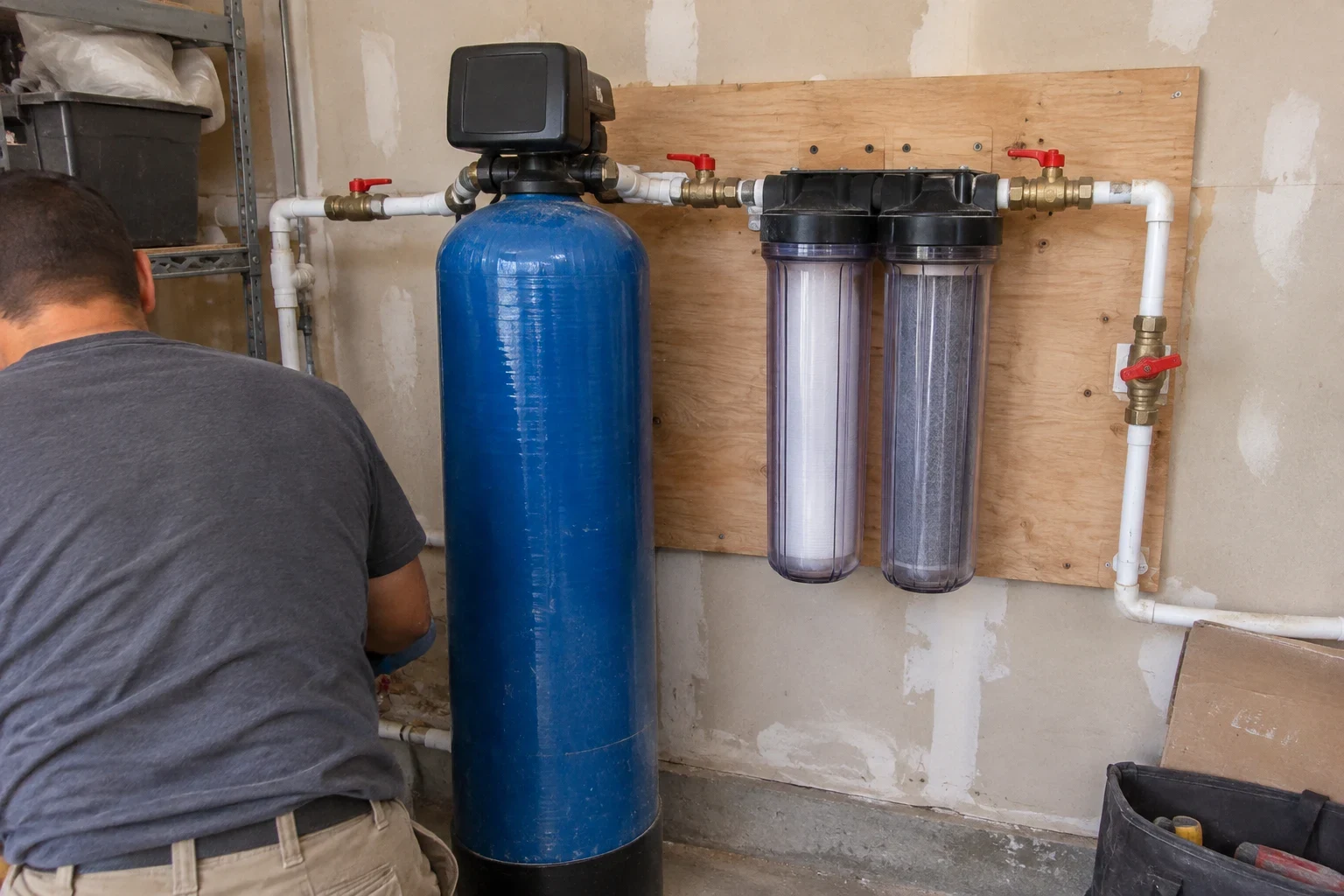
What a whole-home filter does, and when it is the right call
City water is treated to be safe, and the disinfectant that keeps it that way is what many people taste in a glass from the tap or smell in a hot shower. A whole-home system uses carbon media to reduce chlorine taste and odor, along with sediment, before water reaches any fixture. The difference shows up in coffee, ice, bath water and laundry alike.
Filtration is not softening. A filter improves taste, odor and clarity; it does not remove the calcium and magnesium that leave scale on glass and fixtures. Many homes pair the two, with the filter placed ahead of the softener so chlorine does not wear down the resin. If your main concern is drinking water only, a reverse osmosis system at the kitchen sink may suit you better, and we will tell you that plainly.
We prefer to install in spring or fall. Water use climbs once the heat arrives, and a system that is already flushed and settled is ready for the season instead of being fitted in the middle of it.
What the installation includes
- Sizing to your flow
- We size the tank to your bathrooms, pipe diameter and how many fixtures run at once. An undersized filter costs you pressure on a busy morning, so we take care to get this right.
- Carbon media chosen for your water
- The main tank holds carbon suited to the disinfectant in your supply. Catalytic carbon handles chloramine better than standard carbon, and we explain which one we are fitting and why.
- Sediment prefilter
- A prefilter catches grit and fine particles before they reach the carbon bed. It protects the media and is simple for you to check and change.
- Clean work at the main line
- We plumb the system with a bypass valve and unions, matched to your copper or PEX, with tidy runs and labeled shutoffs. You can take the filter offline in seconds if you ever need to.
- Placement that respects the heat
- Where the equipment sits in a garage or on an exterior wall, we plan around direct sun and summer temperatures with careful placement and a protective cover.
- Warranty coverage
- Your system comes with a 2-year installation warranty, and our workmanship is backed by a 2-year labor warranty. If you keep an active automated salt delivery subscription, you pay nothing for labor on covered repairs.
Signs your home could use whole-home filtration
Bathrooms that smell like a pool
Steam from a hot shower lifts the disinfectant out of the water, and a closed bathroom holds onto it. Filtering at the main line removes that smell before the water reaches the showerhead.
Coffee and ice taste off
A flat or chemical note in tea, coffee or ice cubes comes from the water going into them. One filter at the main line improves the refrigerator and the kettle at the same time.
Pitchers and bottles everywhere
Many households keep a filter pitcher in the fridge and cases of bottled water in the garage. A single system can take the place of both.
Grit in aerators and screens
Fine particles building up in faucet aerators, showerheads or appliance inlet screens suggest sediment is traveling through the line.
A softener that wears out early
Chlorine breaks down softener resin over time. If yours needed new resin sooner than you expected, a carbon stage in front of it can help it last.
From first call to finished install
- 1
A conversation by phone
Tell us what you have noticed in your water, how many people live in your home and whether a softener is already in place. We outline the options that fit and what each one involves.
- 2
We see the main line
A visit lets us check pipe size, available space and any equipment already installed. You get a written estimate that lists each part and the labor before we put anything on the calendar.
- 3
The install itself
We lay floor protection, close the main valve and fit the system, which usually takes a few hours. Fresh media is flushed until the water runs clear, and we check every joint for leaks.
- 4
Handover before we leave
We show you the bypass valve and the prefilter, and how to swap the cartridge. Media changes are set so the system goes into the hot months freshly serviced.
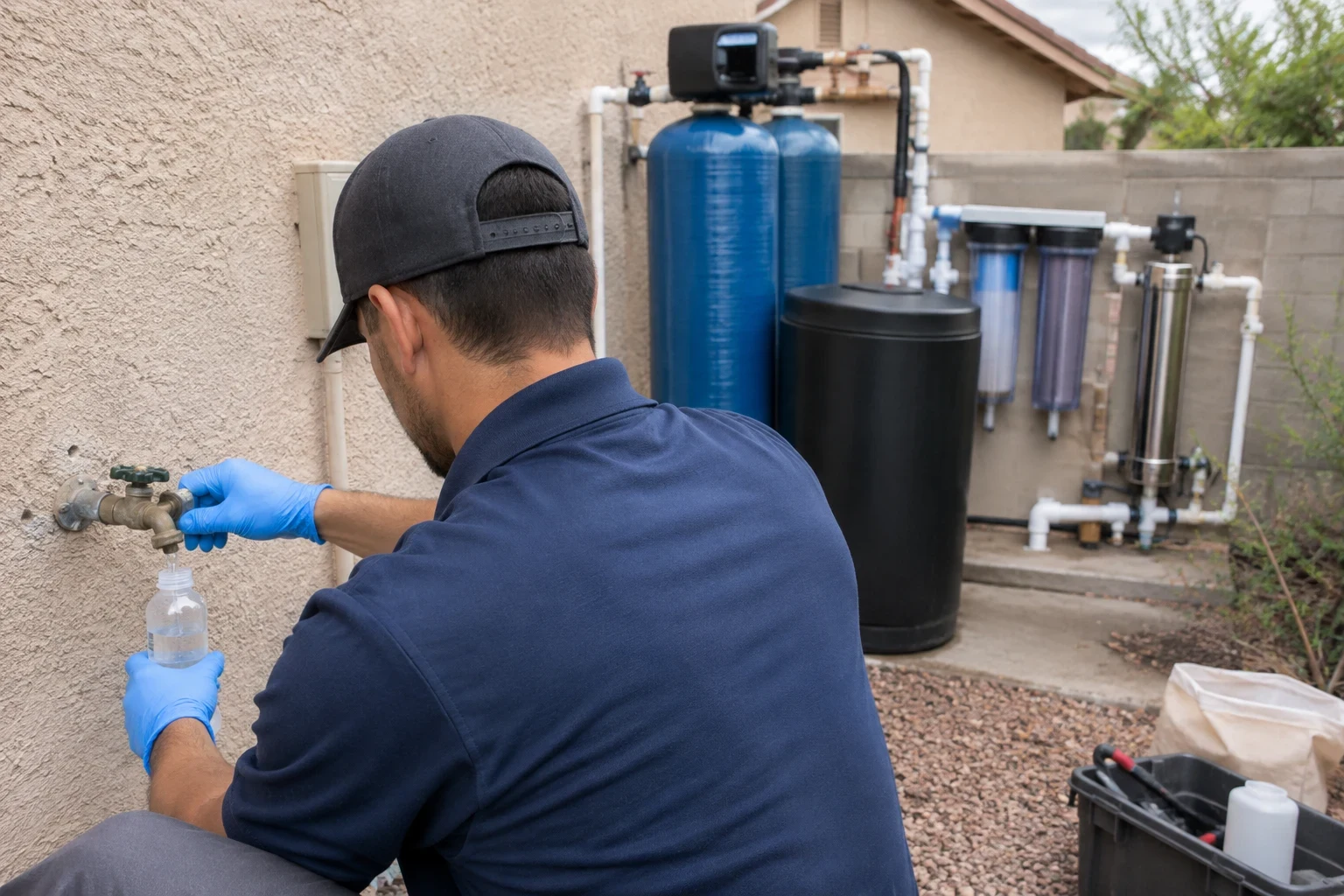
What moves the cost
No two homes are plumbed quite the same, so we price after we have seen yours. Your written estimate separates equipment from labor, line by line. Nothing gets added on installation day unless you approve it first.
- System size
- A home with more bathrooms needs a larger tank and more carbon to keep pressure up and give the water enough contact time with the media.
- Type of carbon
- Catalytic carbon is priced higher than standard carbon. It is the better performer where the supply is treated with chloramine.
- Access at the main line
- A clear garage wall makes for a simple job. Cramped spaces, exterior mains or aging pipe that should be replaced add time and materials.
- Pairing with a softener
- Fitting filtration during a water softener installation lets both share the same plumbing work and visit, which often brings the combined cost down.
- Cartridges and media over time
- Owning a filter means changing prefilter cartridges every so often and, further out, refreshing the carbon. We tell you up front roughly how often each comes due.
Whole-home filtration questions
Something not covered here? (602) 536-4647
Will a whole-home filter soften my water?
No. Carbon takes out chlorine taste, odor and sediment, while calcium and magnesium pass through untouched. Scale on fixtures and glass calls for a softener instead. Many homes run both, with the filter placed first in line.
Will it lower my water pressure?
A correctly sized system should leave your showers feeling the same. Weak pressure after an install usually traces back to one of two things: a tank chosen too small for how many fixtures run at once, or a sediment cartridge left in too long. We size to your fixtures and show you how to change the cartridge on your own.
How often does the media need replacing?
It depends on your household's water use and the carbon in the tank. Sediment cartridges come due sooner, often every few months, and the carbon bed lasts much longer. We write out a schedule for your specific system instead of quoting a generic interval.
Can the system sit outside or in a hot garage?
It can, with some planning. We keep the tank out of direct sun wherever we can and add a protective cover when it has to sit exposed. That keeps summer heat from aging the housing and fittings before their time.
Does it handle chloramine as well as chlorine?
Standard carbon handles chlorine well but works slowly on chloramine. Catalytic carbon is made for it. We confirm which disinfectant your supply uses, fit the media that suits it and tell you which one went into the tank.
Have it in place before the heat arrives
A spring or fall install gives the media time to settle before summer water use climbs. Tell us about your home and we will explain which system fits and what the work involves.